
The PLR Resources You Own Are Probably Fine. Your Plan for Using Them Isn't.
I've already admitted that I own more PLR than I'll ever use. That conversation happened, and I'm not going to repeat it here. What I want to talk about instead is what to actually do next, because owning a lot and knowing what to do with it are two completely different problems.
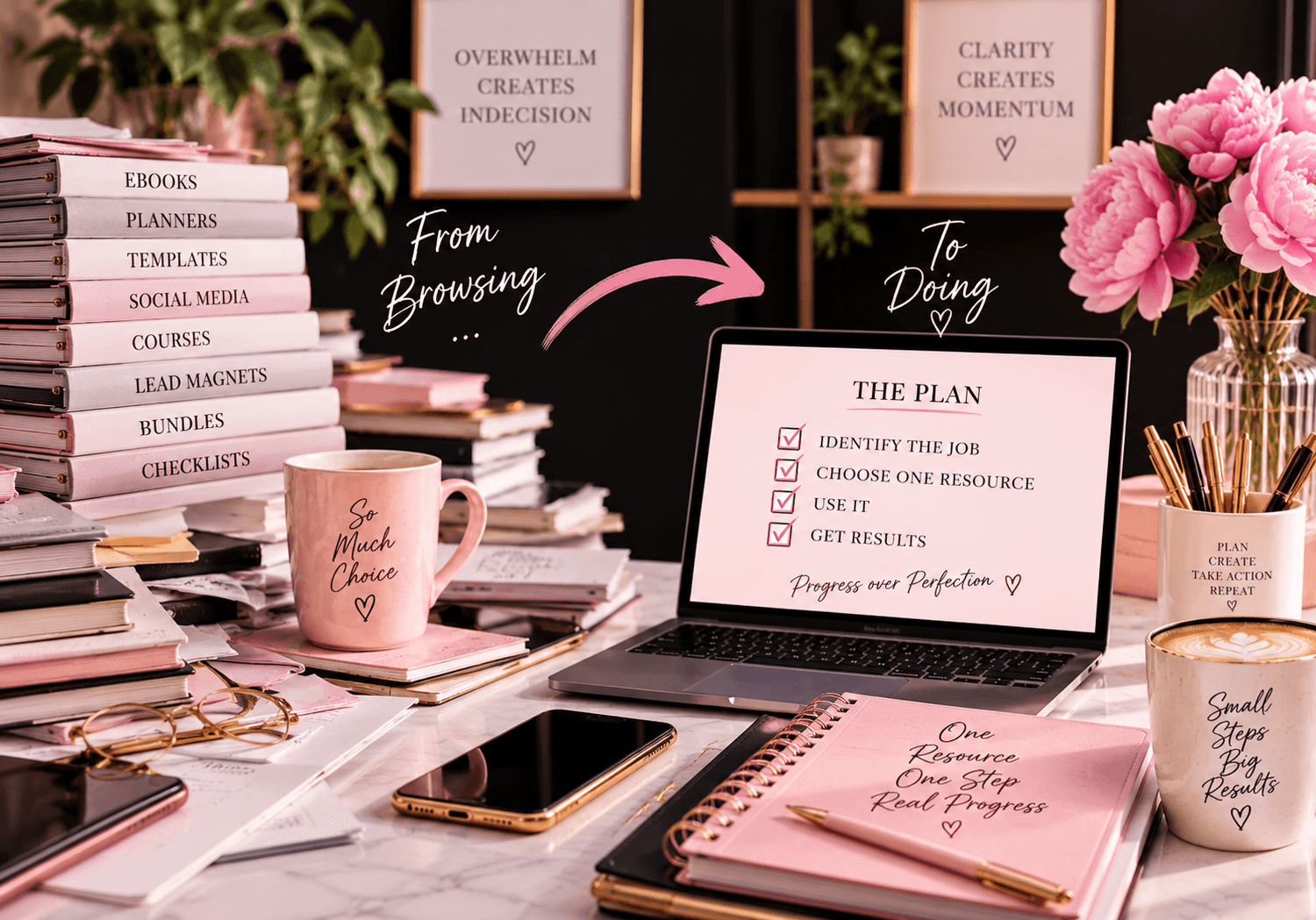
Here's a situation that's incredibly easy to fall into. You've got folders full of PLR and MRR. Ebooks, planners, templates, social posts, courses, lead magnets, bundles. You genuinely want to use them. So you open the library, and you're faced with everything at once. Instead of making a decision, you start browsing. Ten minutes later you've scrolled through half your collection, closed a few folders, opened a few others, and you still haven't picked anything.
That's not a resource problem. That's a starting problem.
The question you're asking is the wrong one
When you open your library and ask "what can I do with all of this," you've given yourself an impossible task. Everything is a possible answer, which means nothing stands out as the answer. You're trying to choose from an open-ended list, and open-ended lists are exactly where decisions stall.
Flip the question. Instead of starting with your library, start with your business.
What does your business actually need right now? Not eventually, not someday. Right now.
"I need something useful to send to my email subscribers this week." That's a job.
"I need a lead magnet." That's a job.
"I need content for next week's social posts." That's a job.
Once you've named the job, go into your library looking specifically for something that fulfils it. You're not browsing anymore. You're searching for a match. That's a completely different mental task, and it's a much easier one.
This also fixes a habit that quietly derails a lot of PLR use: picking a resource first and then trying to invent a reason to use it. You open a folder, see a 60-page ebook, and think, well, I own this, I should probably do something with it. But owning a 60-page ebook doesn't mean your business currently needs a 60-page ebook. Choose the resource for the job. Don't choose a resource and then go looking for a job to justify it.
What this looks like in practice
Say the job is "I need something to send my email list this Friday." You open your library with that specific job in mind, not a general browse. You skip past the templates and the social media packs, because neither fulfils this particular job. You land on a short PLR guide that's genuinely relevant to what your list cares about right now.
Before using anything, you'd check what that resource's actual licence allows, since permissions vary by product and aren't something to assume from a label. Once you know what you're working with, you adapt the piece into an email using whatever the licence permits, send it, and the job is done.
Notice what didn't happen. You didn't open ten other folders to see if something else might have been better. You didn't read through the planners or the courses "just in case." You had a job, you found a resource that fit it, and you moved straight to using it.
Pick one, and know when to stop comparing
Once you've identified the job and found a resource that fits, the next step is simple, even though it's easy to talk yourself past it. Choose that one resource and work with it.
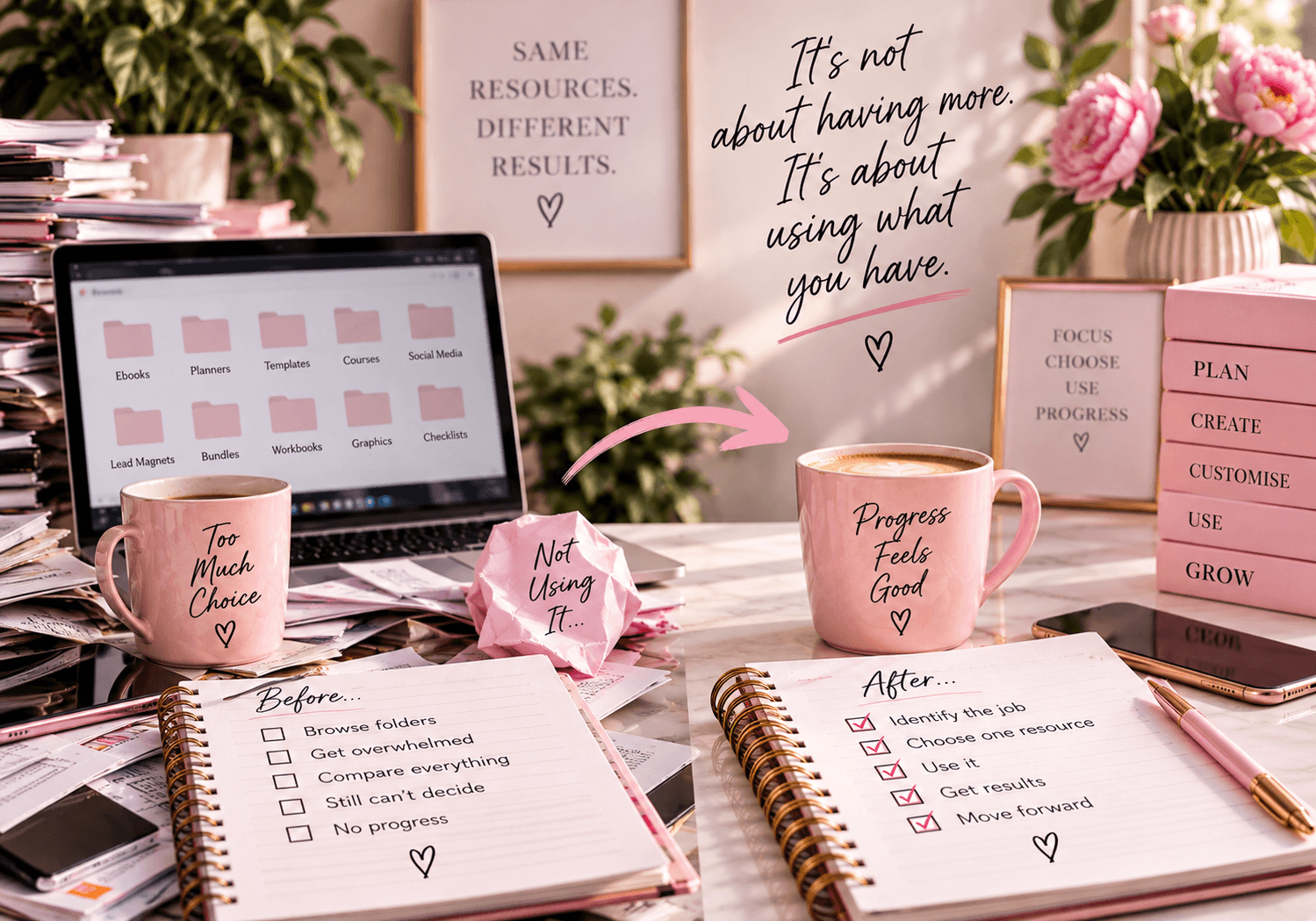
To be fair, sometimes checking a second option really is due diligence. If you're genuinely unsure whether a resource fits the job, a quick comparison can be the right call. But there's a difference between that and reopening the library again and again, looking for something marginally better, when what you already found does the job perfectly well. At that point, the comparing isn't due diligence anymore. It's a way of staying in the choosing stage instead of moving into the using stage.
The Pick One rule is exactly that plain: once something fits the job, pick it, and move from choosing into using. You can always come back to the library next time you have a new job. You don't need to solve every future job today.
You don't need a perfectly organised library to use one resource today
Here's the one I want to be direct about, because it's an easy trap and a well-intentioned one.
It's incredibly easy to convince yourself that before you're allowed to use anything, you need to sort your whole library first. Rename the files properly. Catalogue everything by type and niche and licence. Build the system. Then, once it's all organised, you'll finally know what you have and you can start using it properly.
Useful organisation and organisation-as-prerequisite look similar from the outside, but they're different things. Useful organisation solves a real problem you actually have right now, for instance, you can't find a specific resource you know you own, or you keep buying duplicates because you've lost track of your library. That kind of tidying earns its place. Organisation-as-prerequisite is different: it's the belief that no resource is usable until the whole library has been sorted first, even when nothing about today's specific job actually requires that. That version isn't solving a problem in front of you. It's postponing one.
Organisation can genuinely be useful. I'm not telling you not to organise anything, ever. But "I need to organise everything first" can quietly become another way of delaying the actual work, and it's a particularly sneaky one, because it feels productive while you're doing it. You're not avoiding your library, you're managing it. Except the job you actually needed to do, the email, the lead magnet, the social content, still isn't done.
You don't need a perfectly organised library to use one resource today.
The path
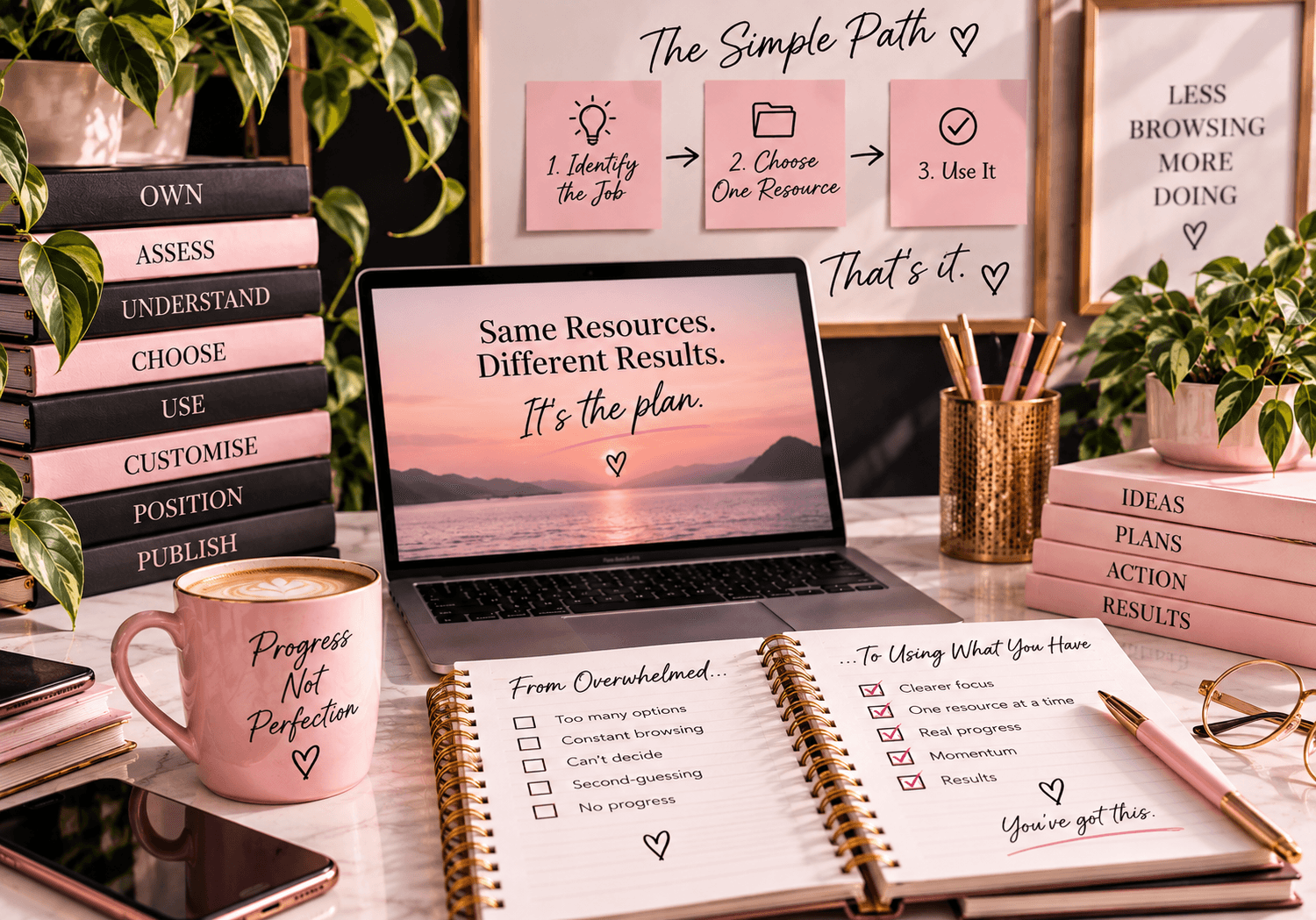
Underneath all of this is a simple sequence, and it's the whole point of this article:
identify the current job → choose one relevant resource → use it
That's it. No elaborate system, no full library audit, no perfect folder structure required first. Just the job in front of you, one resource that fits, and the decision to actually use it instead of continuing to look.
You may not be sitting on a PLR problem at all. Sometimes what's missing is simply a way to choose and move, and that part is fixable, starting with the very next thing your business needs.
What's the job in front of you right now? Tell me in the comments, and if this helped you get unstuck, save it for the next time you catch yourself browsing instead of choosing.
Written by:
Gaye Fern_PLR Professionals Founder

Categories




Trending
Here's What "Designed by a Seller" Actually Requires.
Your Plan for Using Them Isn't.
It's easy to look at a PLR product and immediately start imagining everything you could do with it

About me

Hi there 👋 My name is Gaye. PLR Professionals is here to help digital product creators use PLR, MRR and ready-made resources with more clarity and confidence. Find practical guidance on licensing, customisation, digital product strategy, marketing and AI—so you can make better use of the resources you already own.
Created with ©systeme.io